For a long time, minhwa were treated as everyday things. People used them, and when they wore out, people replaced them. Few thought of them as “art.”
The first collectors
In the 1910s, the Japanese thinker Yanagi Muneyoshi began collecting Korean folk paintings. He believed beauty could be found in objects made by ordinary people. In 1924 he helped open a museum of Korean folk crafts in Seoul.
Later, Korean collectors took the lead. One of them, Zo Zayong, loved the symbols and stories in minhwa. In 1968 he opened the Emille Museum in Seoul to share them with the public.
Painting minhwa again
Today, minhwa hang in museums around the world, including several in the United States. And many people, in Korea and abroad, are learning to paint them again.
From the Artist
— Jieun Ro
I am truly glad that minhwa, once undervalued, is now loved by so many people. Because beginners can start easily, the door has opened wider.
But I believe we should be careful not to treat minhwa like a coloring book, just filling in the shapes. If we skip the line work and coloring methods our ancestors built up — and basic steps like sizing the paper and mounting the work — the true value and life of minhwa will fade.
The backbone of the old techniques should be passed down as it is, and new creative ideas should bloom on top of that strong base. Easy to approach, but never taken lightly — I think that is the responsibility all of us who paint and share minhwa today should keep together.
Try This
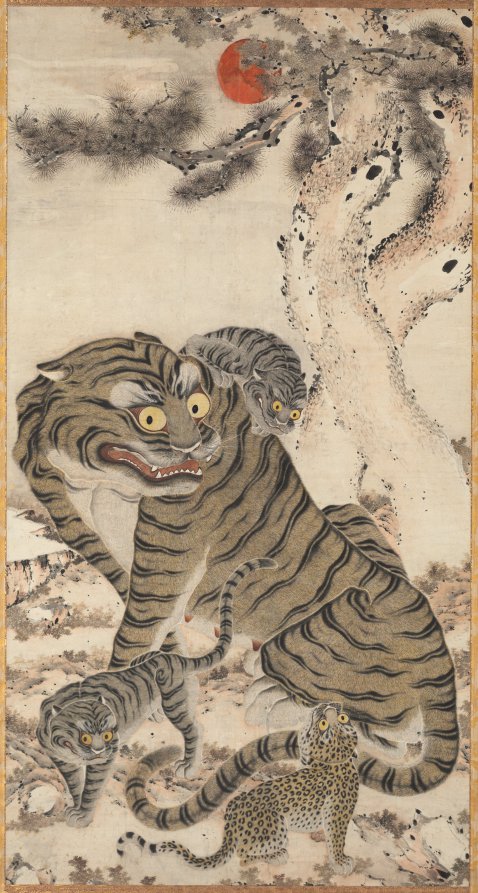
The tiger family on this page is in the Cleveland Museum of Art in Ohio. Is there a museum near you with Korean art? Make a plan to visit!
Image credits & sources
This story is part of an ongoing series. More stories are on the way.
Back to all stories